


James McIntyre - Link to Airth
- Admin
- Dec 14, 2025
- 3 min read
812 Private, Princess Patricia’s Canadian Light Infantry, 80th Infantry Brigade, 27th Division
Age: 21
Date of death: 8.5.15
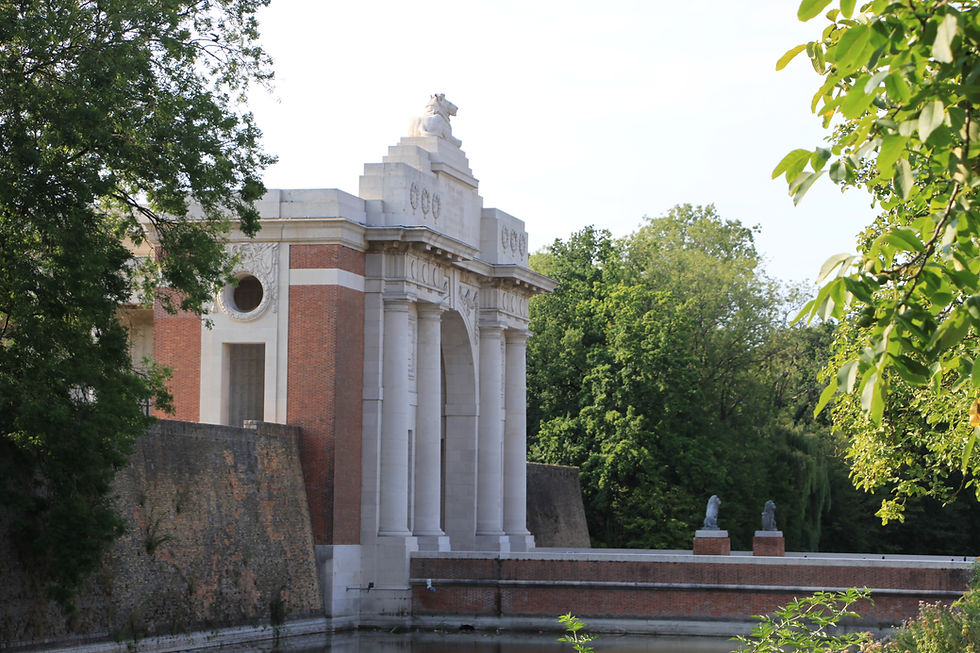
Buried: Menin Gate Memorial Panel 10
Family history: Oldest of two sons of Robert and Letitia McIntyre, Balmuir Cottage, Airth Road. He emigrated to Canada in 1913 and was employed as a Police Constable with the Stirlingshire Constabulary and based in Denny before he emigrated to Canada and joined the Canadian Police. He enlisted on 27 August 1914 in Ottawa and stated that he had previous service with ‘B’ Company Highland Cyclists, Black Watch. He went to the UK and then to France sailing from Southampton on 20 December 1914 and was admitted to No.14 General Hospital at Boulogne from 23 to 29 January 1915 with frostbite.
Action leading to his death
The Princess Patricia Light Infantry were part of the British 27th Division and were in the line in front of Bellewaarde Lake on Frezenberg Ridge and were engaged in the Second Battle of Ypres. The Germans had been preparing the ground around the Ypres Salient for a concentrated infantry attack, and it was not until 8 May that they considered that they had sufficient strength for a repeated attack on the British line. The German assault began with heavy shelling of the British line blowing in trenches and cutting telephone lines added to this the Patricia’s reported that they were being shelled not just with HE and shrapnel shells but with gas shells.
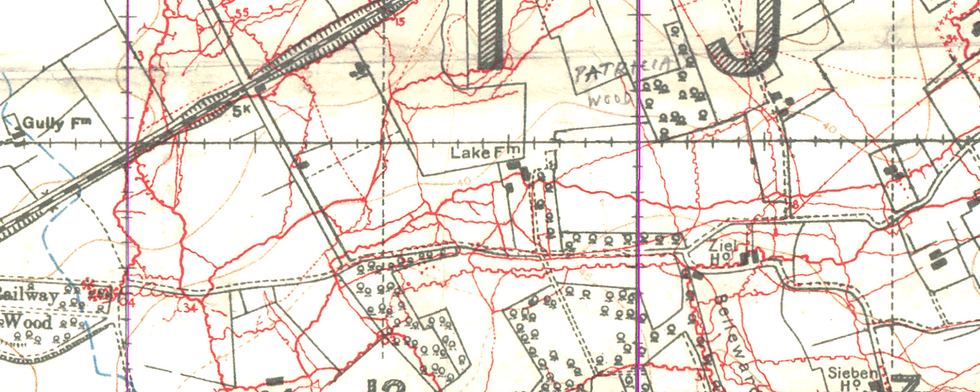
The defence of the line was achieved with rapid rifle fire and where possible by machine gun fire as the Patricia’s manned the trenches as best they could to beat off the German infantry attacks. With the lines of communication having been destroyed early in the day runners were now employed to take messages and orders to and from the front line. The heavy shelling had caused a large number of casualties in the Patricia’s line and the Commanding Officer was now calling up what he could to fill in the gaps in the line and these included Pioneers, Orderlies, and officer’s servants, so that by 9am every available Patricia was in the front line holding off the German attack. It became a day of grim endurance for the Patricia’s with the battle wavering back and forward, the Patricia’s had taken their camp colour known as the Ric-A-Dam-Doo into the line and this was being waved by RSM A G Fraser, who was standing on the trench parapet and who was suffering from a bad head wound and was half crazed. He was to die later in the day from this wound. By around 1.30pm the Patricia’s began to give ground at 2pm Lieutenant Niven, now acting Battalion commander, reported that he would not withdraw his battered Battalion as this would mean leaving behind large numbers of wounded and if stretcher bearers could be supplied he would with draw at dusk. At 11.30pm the Patricia’s were relieved by the 3rd Battalion King’s Royal Rifle Corps although there were precious few of them that marched out of the line with only four officers and 150 men remaining. It had been a magnificent defence by the Patricia’s and it prompted Major General Snow to report ‘..No regiment could have fought with greater determination or endurance. Many would have failed where they succeeded.’


Comments