


Duncan Gillespie McPhee - Link to Dennyloanhead
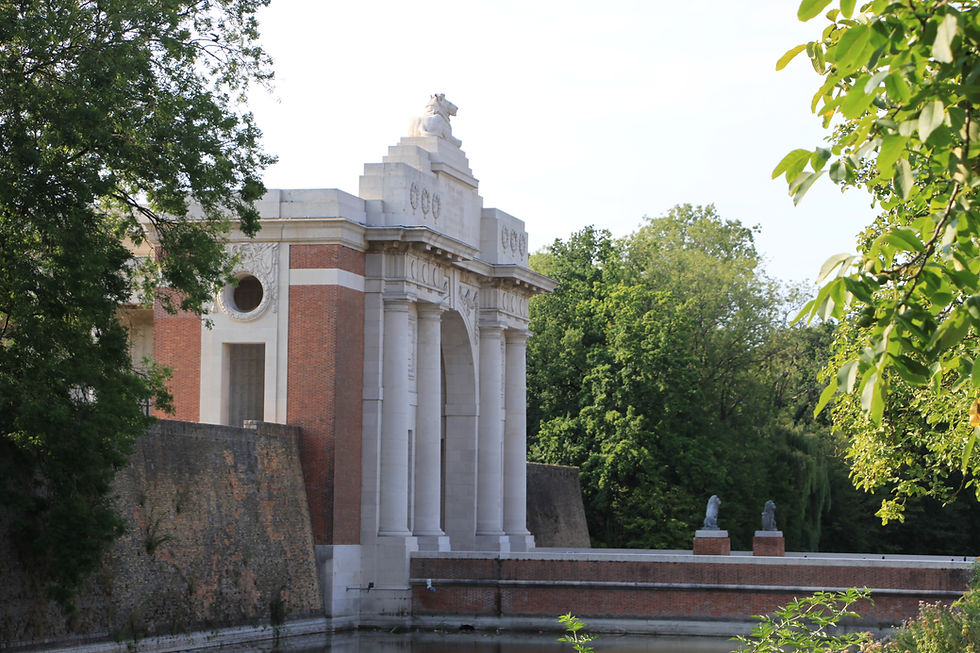
28773 Private, ‘B’ Company, 16th Battalion (Canadian Scottish), 3rd Canadian Brigade, 1st Canadian Division.
Age: 33
Date of death: 22.4.15
Buried: Menin Gate Memorial Panel 24
Family history: Son of James and Kathleen Gillespie McPhee formerly of Bankier. He gave his trade as a Moulder when he enlisted at Valcartier training camp, near Quebec, on 23 September 1914, and his next of kin he named as his brother John McPhee, 311 Vancouver Street, British Columbia.
Action leading to his death
On the 22 April 1915 the Germans launched the first gas attack near Langemarck and broke through the French Territorial forces holding the line. A gap of some 8,000 yards had opened up and the Canadians flank, on the French right, and the British Second Army’s left flank was now exposed. The Germans had a clear path in to the British rear and to taking Ypres. The 27th division and 28th Divisional commanders recognised the danger of the situation and rushed reserves into the gap and the left flank of the Second Army ended abruptly at Mouse Trap Farm near Wieltje. Suddenly, with victory in his grasp Von Falkenhayn the German commander, who had underestimated the effects of this new weapon, and had not provided enough reserves to exploit the breakthrough had stopped. They had also stumbled into their own gas and seeing the horror in the French lines they had passed through they cautiously held back concerned about their own safety. They stopped and dug in.


At 8pm the Canadians received a request from the General Putz, commanding he French forces, to support a counterattack to be made by the 45th Algerian Division, this division was in no condition to make such an attack having lost all their artillery and the surviving infantry were in total disarray. The only assault that the Canadians could make was to take Kitchener’s Wood, the name has nothing to do with Lord Kitchener but is a translation from the French bois de cuisiniers, and this would deny the Germans a jumping off point for an attack on nearby St Julien. Unfortunately, the deplorable planning and execution ruined what was a feasible operation. There were no rearranged set of objectives beyond clearing the Germans out of the wood and there was no plan to consolidate the gains. Artillery support was practically non-existent with Lieutenant-Colonel Leckie, commanding 16th Battalion, stating that he understood this be because there was no ammunition. The Canadians were also unaware of the Germans exact positions as they did not have time for proper reconnaissance and consequently the two Canadian Battalions, 10th and 16th, would be advancing blindly. The Canadians also advanced shoulder to shoulder in straight lines not exactly the right formations when faced with rifle and machine gun fire. Instructions for the attack were issued at 9.40pm and it was not until midnight that the two Battalions were ready to move off. The 10th Battalion took the lead with the 16th Battalion in close support, they both formed up less than 1,000 yards from the German positions. The 10th Battalion was in four lines with a space of 30 yards between each line and the men shoulder to shoulder, and the 16th Battalion 30 yards behind the last rank of the 10th Battalion. The troops took off their packs and great coats and fixed their 17 inch bayonets. There was no moon and only the outline of the wood could be seen. The leading ranks of the 10th Battalion ran into an unforeseen obstacle, the result of not undertaking a reconnaissance, it was a hedge six feet high and with a thick strand of wire running through it. The night sky lit up as the Germans fired flares and opened up with their machine guns and artillery. The German strong point and machine guns at Oblong Farm taking a deadly toll. The 16th Battalion men were dropping thick and fast and with the murderous wall of fire the ranks wavered but they went on and reached the German positions bayonetting and chasing the surviving Germans into the wood were hand-to-hand fighting took place. What was left of the two Canadian Battalions halted when they reached the northern fringes of the wood and dug in. However, given their exposed position, being some 1,000 yards behind German lines, and with the Germans trenches still occupied and resisting, the Canadians in the north end of the wood were ordered to retire. The 16th Battalion roll was answered by five officers and 263 Other Ranks.
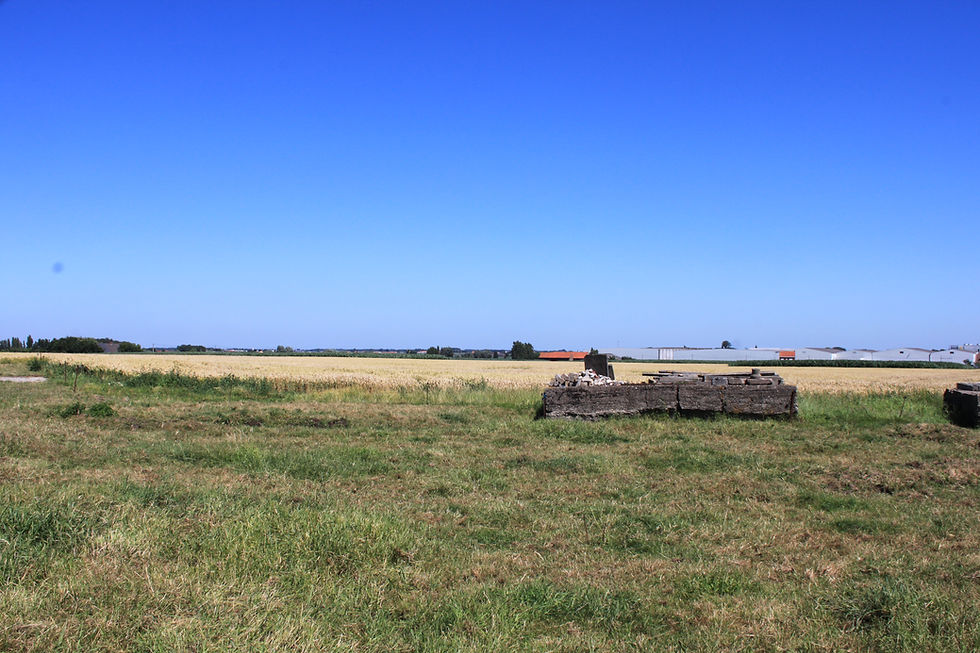
During the fighting Canon Frederick Scott, chaplain to the Canadian 1st Division, recalled an incident when he was in the line as the Canadian 16th Battalion went into the counterattack at Kitchener’s Wood: ‘The Battalion rose and fixed bayonets and stood ready for the command to charge. It was a thrilling moment, for we were in the midst of one of the decisive battles of the war. A shrapnel burst just as the men moved off and a man dropped in the rear rank. I went over to him and found he was bleeding in the neck. I bound him up… was helping to walk towards the dressing station when I saw what I thought were sandbags in the moonlight. I called out, ‘Is anybody there?’ A voice replied, ‘Yes, sir, there is a dying man here.’ I went over and there I found two stretcher-bearers beside a young fellow called Duffy, who was unconscious. He had been struck by a piece of shrapnel in the head and his brain was protruding.’ Private James Duffy is buried at Vlamertinghe Military Cemetery. He was an ex-Marathon Champion of Scotland and lived at 12 Mary Street, Edinburgh before emigrating to Canada.
Duncan was reported as wounded and missing on 22 April and his death was officially confirmed on 31 March 1916. His body was lost and he is listed on the Menin Gate Memorial.


Comments