


Kemmel Chateau Military Cemetery
Updated: Aug 9

Kemmel Chateau Military Cemetery is located in the grounds of the former Kemmel Chateau which was north-east of Kemmel village and the cemetery was established on the north side of the chateau grounds in December 1914. It continued to be used by divisions fighting on the southern sectors of the Ypres Salient until March 1918, when after fierce fighting involving both Commonwealth and French forces, the village fell into German hands in late April 1918. The village was retaken later in the year, but in the interval it was badly shelled and the old chateau destroyed. The entrance to the cemetery is a representation of the old chateau that was destroyed and the trees make a wide avenue to the Cross of Sacrifice. The original chateau was located to the rear of the cemetery and was owned by the son-in-law of the Hennessy brandy family. The road that runs past the cemetery was known to the British as Sackville Street. The village of Kemmel was behind the lines for much of the War and despite this it was often shelled by long range German guns. Kemmel Churchyard CWGC is located nearby.

Diary Accounts of Kemmel
In his diary ‘The Burgoyne Diaries. The First Winter at Ypres with the Royal Irish Fusiliers’ Gerald Burgoyne records in his entry for 16th December 1914: ‘..Kemmel, the town through which we marched on our way here shows, in its skeletons, shattered windows and pitted roadway, how heavily it has suffered. Just behind the town rises Mont Kemmel, a small eminence on which stands the ruins of a restaurant (the Belvedere).This is our artillery observation post.’ Writing in his diary on 16th December 1914, Billy Congreve records: ‘They are shelling Mont Kemmel very heavily today. This hill has even a more commanding view that our Scherpenberg and one can see even more of the German and our lines. We have artillery observers up there, so naturally the Germans shell it. There is a sort of watch tower on the highest part (the Belvedere) – this the Germans make a dead set on and shell it unmercifully. They have so far put only one shell through the tower, but the ground all round it is a most extraordinary sight; just as if hundreds of earthquakes and cyclones had visited it,

so smashed up is it.’ On the 19th December 1914, he wrote: ‘The German gunners seem to be a good deal more active. Cornwall and I went up to the top of Mont Kemmel where one really gets a grand view. The tower is now only ‘standing on one leg’. Very little more and down it will come.’ Of the town, Burgoyne noted in his diary: ‘Took a walk around Kemmel town this morning. I don’t think that out of a town of some 4,800 inhabitants there is one house quite intact and undamaged by shrapnel, and half the place is in ruins, blown down

completely…There are some dozen shops of sorts where bread, butter, candles, chocolate, and sweets can be bought, and milk and eggs can be easily obtained…The interior of the church is smothered in masonry dust. A shell has pierced the chancel behind the High Altar and shattered it and littered the chancel with debris.. A lot of the stain glass windows are shattered with shrapnel…’ In January 1915, Burgoyne noted in his diary that two local men had been caught and shot by the Northumberland Fusiliers. They had been signalling to the Germans using the hands of the church clock. The YMCA provided the men with a place for writing letters, to socialise, read books, and play table top games. In Kemmel, this was a hut house and despite its damaged condition was in use in 1917. They also had a dugout in use on the Kemmel Hill which was used up until the German attack during the Spring Offensive in April 1918.
The Doctors House
The Doctors House is located at 47 Kemmelstraat although the original house was destroyed during the war and the house that currently stands here was rebuilt in 1920. Colonel Rowland Fielding, 6th Battalion Connaught Rangers, 47th Infantry Brigade, 16th (Irish) Division, was in the Battalion HQ in the Doctors House in Kemmel. On the 19 February 1917, he led 9 officers and 190 other ranks of the Battalion in an attack from Shamus Farm towards the German trenches at Kruisstraat. The morning was foggy and they attacked at 7.15am without any preliminary barrage, the British artillery supported this raid by putting a box barrage around the selected German trench, despite this the Battalion suffered many casualties, especially from the German retaliatory artillery fire.

By 9.15am the fog had lifted and the raid was over and a quiet had descended with many of the Battalions dead and wounded lying out in No Man’s Land. The Germans offered an armistice for the purpose of collecting the dead and wounded. The Germans insisted that the stretcher parties be unarmed. Parties of British were dressing the wounded and carrying them back to the lines and a Connaught officer Second Lieutenant P L N Gordon-Ralph, who was carrying a revolver, and a German were attending to a wounded man by the German wire. When all the dead and wounded had been collected Colonel Fielding ended the truce however, the Germans had exacted a price, Second Lieutenant Gordon-Ralph who was seen near the German lines and armed had been taken prisoner. In his book The Fifth Leicestershire: A Record of the 1/5th Battalion the Leicestershire Regiment TF during the War 1914-1919, J. D. Hills recounts the death of two Lieutenant-Colonels who were killed by a shell from a long range gun on 4 June 1915 when billed in the Doctor’s House: ‘Colonel Jessop, of the 4th Lincolnshires, was talking to Colonel Jones (5th Leicesters) in the road outside the house, while an orderly held two horses close by. The first shell fell almost on the party, killing Colonel Jessop, the two orderlies and both horses. Colonel Jones was wounded in the hand, neck and thigh.’ Jessop is buried in Dranouter Churchyard, Dranoutre.
Kemmel Hill

Kemmel Hill was landmark of the Western Front in Flanders. With a height of some 150 feet its wartime galleries commanded an extensive view of the Flanders plain and were used as an observation post by countless gunners, staff officers, and sound-rangers. On the lower slopes of Kemmel Hill you will find the French Ossuary that commemorates the mass grave of 5,294 French troops killed in this area in April 1918. Only fifty seven are identified. From here climb the cobbled road to the top of Kemmel Hill and another French memorial to the men who died in the fighting here in April 1918. Kemmel Hill was one of the key objectives of Ludendorff’s Spring offensive in 1918. The 9th (Scottish) Division held the positions here when the Germans attacked on 17 April and again on 19 April and on both occasions the attacks were beaten off. The defence of Kemmel Hill was then handed over to the French, the 9th (Scottish) Division occupying positions in front of Locre, and on 25 April to 29 April in what was named by the French the ‘Battle of the Kemmelberg’ the Germans attacked again with four divisions and the Bavarian Alpine Corps, and this time they pushed the French off the hill and out of Kemmel. The German offensive halted here and the front line was in front of Locre until September 1918 and the allied offensive that drove the Germans out of Flanders. The US 27th and 30th Divisions were in the line in this area and you will find their memorial located on the Kemmel to Vierstraat Road not far from the La Laiterie Military Cemetery.
Cratering the Ridge as seen from Kemmel Hill
On the 7 June 1917, the British blew nineteen mines known as ‘Cratering the Ridge’ beneath the German strong points on Messines Ridge. Specially built platforms were built on Kemmel Hill for the press and VIP’s to observe the mine explosions. It was also from here that Lieutenant Brian Frayling, 171 Tunnelling Company observed the

explosions as an official observer for the Royal Engineer tunnelling companies. He had worked on the Spanbroekmolen mine and had hoped to have had the pleasure of detonating that mine. He was also concerned that the mines would not blow as they had been ready to blow for nearly twelve months and the ammonal may have been contaminated with dampness. He wrote of the explosion at Spanbroekmolen from his vantage point: ‘It was a sheet of flame that tongued in the end. It went up as high as St Paul’s - I estimated about 800 feet. It was a white incandescent light darting high in the air. We had calculated the enemy here would go up as gas at over 3,000 degrees Centigrade.’ He visited the site of the mine afterwards and recorded: ‘It left a deep crater and the largest piece of the enemy I could locate there in daylight was a foot in a boot.’ According to Grieve and Newman in their book ‘Tunnellers’ the Ontario Farm mine resembled a seething caldron. ‘For a long time after the blow the crater resembled a seething cauldron, the semi-liquid mud bubbling like some gigantic porridge pot on the boil.’ War correspondent Philip Gibbs reported: ‘The most diabolical splendour I have ever seen. Out of the dark ridges of Messines and Wytschaete and that ill-famed Hill 60, there gushed out and up enormous volumes of scarlet flame from the exploding mines and of earth and smoke all lighted by the flame spilling over into fountains of fierce colour, so that all the countryside was illuminated by red light. Where some of us stood watching, aghast and spellbound by this burning horror, the ground trembled and surged violently to and fro. Truly the earth quaked…’
Cemetery has a Regimental feel
The Kemmel Chateau Military Cemetery has a distinctly regimental feel to it. Row E has sixty-six graves of men from the Sherwood Foresters (Nottinghamshire & Derbyshire Regiment) 1/8th Battalion from April/May 1915. There is also a large representation of Royal Scots with eight men having died on 21 April 1915. Row N has fifty-eight graves of men from Irish Regiments. Row K has a large number from Canadian Regiments.
FALKIRK AND DISTRICT MEN BURIED HERE
Denny & Dunipace
1st Battalion, Gordon Highlanders
Age 23
29.4.16
M.22

Uncle of Daphne Du Maurier & of Peter Pan
Buried in grave L.4 is Lieutenant Colonel Guy Louis Busson Du Maurier D.S.O., Killed in action 9 March 1915, age 49. He was an uncle of Daphne Du Maurier. He was married to Gwendolen. He was educated at Marlborough and Sandhurst and was gazetted Lieutenant to the Royal Fusiliers on 17 February 1885 and promoted to Captain on 15 September 1896 and Major on 12 December 1900. He fought in the Boer War commanding the 20th Battalion Mounted Infantry. and was Mentioned in Despatches on 29 July 1902 and received his DSO on 31 October 1902. He became famous in 1909 as the author of 'An Englishman's Home'. He was in command of the 3rd Battalion, Royal Fusiliers and Gerald Burgoyne wrote in his diary: ‘Just heard over the telephone from Brigade Head Quarters that Colonel Du Maurier was killed this morning by a shell which blew up Alston House, the old farm which is always used as Battalion Head Quarters when the Battalion is in the trenches… He was the author of ‘An Englishman’s Home,, the brother of Gerald Du Maurier and the son of the artist…he was waiting in the house for his Sergeant-Major to report that everyone was in safety before he took cover himself.’ His name is listed on the Roll of Honour at the Theatre Royal, Drury Lane. In a letter dated 11 March 1915 Barrie described du Maurier: ‘There was always something pathetic about him to me. He had lots of stern stuff in him, and yet always the mournful smile of one who could pretend that life was gay but knew it wasn’t. One of the most attractive personalities I have ever known.’ Du Maurier was uncle to Second Lieutenant George Llewelyn Davies, he along with his four brothers were the inspiration for Barrie’s 'Peter Pan and the Lost Boys’ and the character of Mr George Darling was named after George. George was killed in action on 15 March 1915, age 21, and is buried in Voormezeele Enclosure No.3 Cemetery. George wrote to Barrie before he was killed on 15 March 1915: ‘Dear Uncle Jim, I have just got your letter about Uncle Guy. You said it hasn’t made you think any more about the danger I am in. But I know it has. Do not try to let it. I take every care of myself that can decently be taken. And if I am going to stop a bullet, why should it be with a vital place?....It is very bad about Uncle Guy. I wonder how he was killed. As he was a colonel, I imagine his battalion was doing an attack. Poor Aunt Gwen. This war is a dreadful show. The ground is drying up fast now, and the weather far better…There have already been doings in various parts of the line, and I would rather be George Davies than Sir John French just now. He must have got some hard decisions in front of him. Well, let’s hope for a good change in the next month.
Meanwhile dear Uncle Jim, you must carry on with your job of keeping up your courage. I will write every time I come out of action. We go up to the trenches in a few days again.
Yours affectionately, George
Boy Soldiers
In the Ypres Salient, we are drawn to the graves of 6322 Private John Condon, 2nd Battalion Royal Irish Regiment, killed in action in May 1915, age 14 and the youngest known battle casualty of the war, although this is now questioned, and the grave of 5750 Valentine Strudwick, 8th Rifle Brigade, killed in action in January 1916, age 15. Strudwicks grave attracts a great deal of attention because of its location at Essex Farm and that locations association with Lieutenant Colonel John McCrae and the poem ‘In Flanders Fields.’ There are many more ‘Boy Soldiers’ buried across the Salient and who are not remembered in the same way and these include three from Falkirk District Private William Jamieson, age 17, Private James Duchart, age 16, and Private Herbert Richmond, age 17. There were many reasons why under age boys enlisted in 1914 and 1915 boredom with their jobs, looking for adventure, and escaping family pressures. The checks on age and qualification to enlist were more relaxed than later in the war. The army preferred younger recruits, there was a history of boy soldiers in the army going back over one hundred years. At Waterloo the army had a number of boy soldiers in their ranks. The army preferred younger recruits as they would follow orders and accept discipline more readily than older men. The boys had a belief in their own indestructibility and were prepared to take more risks. We tend to also forget the number of boys who served in the Royal Navy and we do not seem to have the same passionate

response to their service as we do those who fought on the Western Front. With regards to the army, the difference was the sheer number who served on the Western Front and there were more boy soldiers in 1915 than served in Wellington’s army at Waterloo. For further reading on this subject see Richard Van Emden’s excellent book Boy Soldiers of the Great War. There are 13 Boy Soldiers buried here. One age 15, 3/7006 Private Reginald Wilson, 1st Battalion Devonshire Regiment, Killed in action 3 April 1915, age 15. Grave F.71. Son of Frederick and Emily Wilson, 10 Brookgreen Terrace, Well Street, Exeter. One age 16, L/16070 Private John C McCulloch Hunter, 3rd Battalion Royal Fusiliers, Killed in action 10 March 1915, age 16. Grave H.66. Son of James and Mary Hunter, 77 Sussex Road, Southall, Middx. Born at Motherwell. There are 11 age 17. 2866 Private Alexander Darroch, the CWGC record lists his name as Darrock, 2nd Battalion Royal Scots 8th Infantry Brigade, 3rd Division. Killed in action 21 April 1915, age 17. Grave E.21. He was on of four sons and four daughters of Sarah Darroch, 37 Mansfield Street, Partick, Glasgow. His father was unknown. He was employed as a Casual Labourer and a Special Reserve, signing on with the Royal Scots on 15 April 1914, and gave his age as 17 years and 141 days, and that he was serving with the 1st Company Lowland Division Transport and Supply Column. On the 21 April 1915, the Battalion was in the line at Petit Bois and their trenches were heavily shelled in the morning by 8'' high explosive shells. Casualties recorded were eight killed and six wounded with 'A' Company relieved by 'B' Company as a result of the shelling. 18672 Private Albert Edward Gautier, 1st Battalion York and

Lancaster Regiment, 83rd Infantry Brigade, 28th Division. Killed in action 9 August 1915, age 17. Grave J.6. His father and younger brother died when serving. Albert was one of five children of Mrs. Edna Gautier, 34 Tapton Bank, Manchester Road, Sheffield, and the late 10885 Sergeant Francis Herbert Gautier, 11th Battalion Cheshire Regiment. Died 11 June 1916, age 44, and is commemorated on the Screen Wall in Sheffield General Cemetery. Francis had contracted stomach cancer whilst serving in France and had been sent back to the UK to recover. He died in an Essex hospital. He was a police officer in Sheffield before the war and enlisted in August 1914. As he lay in hospital dying from cancer he wrote a farewell letter to his daughter Marie: ‘I am writing because I want you in after years to know how dearly I loved you, I know you are too young now to keep me in your memory.’ Albert's younger brother 4525311 Private Wilfred Gautier, 1st Battalion West Yorkshire Regiment (Prince of Wales’s Own), Died 16 June 1921, age 16, and is commemorated on the Screen Wall in Sheffield General Cemetery. He was killed in a training accident. Albert was in the line at Petit Bois with the Battalion on 9 August and the War Diary records that the trenches had been subjected to shelling the previous day. On the 9 August they recorded that the situation was fairly quiet with nothing to report. Casualties recorded were ‘killed OR 1, wounded OR 1.’ The others age 17 are 1605 Private George Blythen, 1st/4th Battalion attached 1st/5th Battalion, Cheshire Regiment, Killed in action 27 March 1915, age 17. Grave F.42. Son of Andrew and May Elizabeth Blythen, 61 Rodney Street, Birkenhead. 20425 Private M Doherty, 7th Battalion Royal Inniskilling Fusiliers, Killed in action 16 October 1916, age 17. Grave F.2. Son of James Doherty, of Mill Street, Ballyshannon, Co. Donegal. G/829 Private Archibald Victor Duffell, 2nd Battalion The Buffs (East Kent Regiment), Killed in action 14 March 1915, age 17. Grave F.46. Son of Albert William and Alice Duffell, 3 Vine Cottages, Queen's Road., Thames Ditton, Surrey. 18218 Private Samuel Eardley, 2nd Battalion East Yorkshire Regiment, Killed in action 10 August 1915, age 17. Grave K.6. Son of George Eardley, 26 High Street, Silverdale, Newcastle, Staffs. 22980 Private G Faulkner, 1st Battalion Welsh Regiment, Killed in action 12 September 1915, age 17. Grave B.66. Son of Mr. and Mrs. George Faulkner, 30 Rolls Street, Canton, Cardiff. Alias: 17515 Private Harold K Hodsden (served as Duggan), 2nd Battalion King’s Own (Royal Lancaster Regiment), Killed in action 26 June 1915, age 17. Grave J.57. Son of Harry E. and Belle L. Hodsden, 20 Main Street, Leominster, Massachusetts, U.S.A. 7704 Private John O'Donoghue, 6th Battalion Connaught Rangers, Killed in action 8 February 1917, age 17. Grave L.18. Son of John and Kate O'Donoghue, of Higgins Lane, Watergate Street, Bandon, Co. Cork. 26052 Private A Shields, 7th Battalion Inniskilling Fusiliers, Killed in action 25 September 1915, age 17. Grave E.4. Son of Arthur and Jane Shields, 38 Dunvegan Street, Belfast. G/18189 Private William John Styan, 4th Battalion Royal Fusiliers, Killed in action 20 May 1916, age 17. Grave N.27. Son of William and Hannah Styan, 105 Catford Hill, London. Formerly served in the Royal Navy, invalided March 1915, enlisted in Royal Fusiliers June 1915.
Royal Engineers
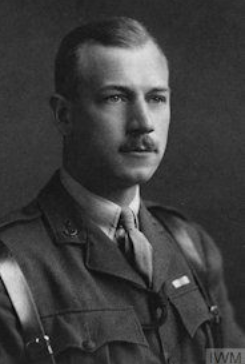
Major Alan Robert Constantine Jenks M.C., Mentioned in Despatches, 61st Field Company, Killed in action 31 July 1917, age Grave L.5. He was married to Stella Bisshopp Jenks, Radnor House, Manor Way in Blackheath, Kent. Alan Jenks was born in Melbourne, Australia on 12 April 1891. His family moved to England around the turn of the century and Alan entered Blundells School, an independent co-educational boarding and day school in the English public school tradition, in Tiverton, Devonshire in 1903. In 1908 Jenks entered City & Guilds College in London where he studied towards a Bachelor of Science Degree in Civil Engineering and Mechanical Engineering from 1908 to 1911. On 23 January 1914 Jenks joined the Inns of Court Officers Training Corps as a Private (Number 752). He was gazetted Second Lieutenant in the Royal Engineers in late 1914 and joined the School of Military Engineering at Chatham, Kent for training

and was posted to the 61st Field Company and went to France on 21 May 1915. He won his M.C. at Hooge for his actions during a reconnaissance of the German trenches at Railway Wood on 22 July 1915. Jenks citation read: ‘It was during the action described above that 2nd Lieutenant Jenks displayed conspicuous gallantry and ability when he made a valuable reconnaissance of the enemy’s trenches and in the ensuing fight displayed great personal dash, initiative and resource.’ He was promoted to Captain on 10 November 1916, and on 9 May 1917 was promoted to Acting Major. He was to be killed by a sniper near Wytschaete.
There are 11 men from the 250th Tunnelling Company all killed on 15 June 1916 (actually 10 June). They are buried in graves D.10 to D.20. They are Sergeant H. B. Lambert, Corporal A. Graham and 9 sappers : Kelly R, William Henry, W Vowies, James Henry, G. Quayle, W. Thomas, G. Grant, Adam Wright and Joseph Wood. They were working on the mine galleries at Petit Bois. At 6.30am on 10 June the Germans sprang a mine over the British deep gallery from within their own wire. This resulted in considerable damage to the gallery and ‘imprisoning’ twelve men who were working at the face. The gallery was damaged between 1250 to 1500 feet. A rescue was immediately started to dig around the collapse and reach the trapped men. They worked day and night in continuous shifts digging at the rate of 12 metres (40 feet) per day however, the tunnel collapse was 76 metres (250 feet) and it took them six and a half days to reach the face. They expected to find all the men dead and had already dug graves for them. They did indeed find eleven men dead and the twelfth was assumed to be buried under the debris. On the 21 June the War Diary records that: ‘S.P. 13 Deep offensive - repairing smashed gallery.’ By the 28 June the gallery had been repaired and retimbered and a skid track for tramming the spoil installed. Read more about the Petit Bois mines.


Royal Flying Corps
Second Lieutenant Elvis Albert Bell, 22nd Squadron, Killed in action 22 September 1917, age 23 Grave X.71. He was Canadian and the son of Mrs Sarah Bell, Glanford, Wentworth, Ontario. He enlisted on the 23 September 1914 giving his profession as a heating engineer. He joined the infantry service number 37028 as a Private and was transferred to the Corps Troops Supply Column on 2 February 1916. On the 6 April 1917, he was transferred to the Royal Flying Corps and was gazetted Second Lieutenant. He was flying A7205 Bristol F2b on an observation patrol with his observer Second Lieutenant Roger Emmett when they were shot down in flames over Hollebeke by Hauptmann Rudolf Berthold commander of Jasta 18. Emmett’s body was not recovered and he is listed on the Arras Memorial. Berthold

was a highly decorated ace with 44 kills to his name. After the war he joined the Freikorps, the precursors of the Nazi stormtroopers of the SA, in 1919 and was killed in Harburg on the Elbe on 15 March 1920 by anti-Freikorps demonstrators strangled, it was reported, by the ribbon of his ‘Blue Max’. On his grave was inscribed ‘Honoured by his enemies – slain by his German brethren.’
There are two men buried here who were executed at Kemmel. Follow the link to read their stories.
Private Stanley Stewart, 2nd Battalion, Royal Scots Fusiliers, 90th Brigade, 30th Division. He had been conscripted back into service having previously being invalided out in 1914. He had deserted on 25 July 1917, he escaped from custody and recaptured. He was executed on 29 August 1917. Private James C Smith, 17th Battalion (1st Liverpool Pals) King’s, 89th Brigade, 30th Division. He was executed on 5 September 1917 for disobedience and desertion.

17th Battalion The (King’s Liverpool Regiment), 89th Infantry Brigade, 30th Division
Major Arnold Inman Draper, Killed in action 21 October 1917, age 35. Grave O.38. Son of Hugh and Gertrude Isabella Draper, of Bebington, Birkenhead. He married Evelyn Mary Draper in 1912 and they lived at, Winterdyne, Rocky Lane, Heswall, Birkenhead with their two children. His mother was a member of the Inman Line Shipping family. The Inman line transported more emigrants to the USA than any other shipping line by focusing on the poor and offering cheap fares. Arnold was born on 18 March 1881 and his mother died at the age of 25 on 31 March within a few weeks of his birth. His father remarried. Arnold was educated at Locker’s Park Preparatory School, Hemel Hempsted and then Rossall School in Lancashire and left school in 1899 joining a branch of the Bank of England as a Clerk in Liverpool. He was a keen sportsman representing his school at Hockey, Cricket and Football. He played for Bebington Hockey Club and was a member of the first English side to tour Germany, so popular was he with German hockey lovers that he was made an honorary member of the Uhlenhorster Hockey Club in Hamburg in 1901. He represented England between 1904 to 1908. On the outbreak of war he enlisted as a Private in the 17th Battalion and was gazetted as Second Lieutenant in March 1915 and attached to ‘C’ Company and went to France with the Battalion in November 1915. From 7 to 31 March 1916 he was attached to the Base Horse Transport. On rejoining the Battalion he was promoted to Lieutenant on 1 September 1916, Captain on 17 January 1917 and Major on 1 September 1917. On the 4 July 1917 he was involved in the search for the brother of double VC winner Noel Chavasse in No Man’s land the War Diary recording: ‘On the night of 4th July 1917 at 12.30am Lt. Aidan Chavasse and a party of 8 other ranks left our trenches to patrol the German front line with the object of ascertaining the disposition of the enemy, obtaining identification, and killing any occupants. This patrol on nearing the enemy wire encountered a German patrol which opened fire on them wounding Lt. Chavasse. Our patrol withdrew to our lines, but Lt. Chavasse was missing. Capt. A.I. Draper, Capt. C. E. Torrey, Capt. F. B. Chavasse (RAMC), (this was Aidan’s brother Francis Bernard who was Medical Officer to the 17th Battalion), 2nd Lt. C.A. Peters and Lance Corporal H. Dixon (11531) searched ‘No Man’s land’ for him. During the search, Capt. C.E. Torrey was wounded and taken into our trenches. 2nd Lt C.A. Peters and L/Cpl H Dixon discovered Lt. Chavasse in a shell hole; 2nd Lt. Peters was killed when returning to our line for assistance to carry the wounded officer in. L/Cpl Dixon remained to bandage his wounds. After waiting the arrival of necessary assistance L/Cpl returned for stretcher bearers to carry Lt. Chavasse in, but on going back the party were unable to find the officer and had to return on account of dawn breaking.’ Lieutenant Aidan Chavasse is listed on the Menin Gate Memorial Panel 6. On the 21 October 1917 the Battalion was in the line at Hollebeke and was in the process of being relieved by the 2nd Battalion The Bedfordshire Regiment when a shell landed in the trench wounding him and three other ranks the War Diary recording: ‘8:30pm Battalion relieved by 2nd Bedfordshire Regiment and marched independently to PARRAIN FARM CAMP - Arrived 10:30a.m. CASUALTIES: MAJOR A.I.DRAPER Killed and 3 O.R. wounded’ His funeral on 23 October was attended by a large number of officers and men with the War Diary recording: ‘FUNERAL: A large number of officers and O.R. attended the funeral of MAJOR A. I. DRAPER at KEMMEL Cemetery at 2.30pm’

9th Battalion Welsh Regiment, 58th Infantry Brigade, 19th Division
Major John Angel Gibbs DSO, Mentioned in Despatches. Killed in action 20 September 1917, age 37. Grave H.25. Son of John Angel and Elizabeth Gibbs. He was married to Susan Gladys Gibbs (nee Morel) and they lived with their son at St Maeburne, Penarth. He founded the shipping company Gibbs & Co Ltd of Newport in 1907. He enlisted as a Trooper in the Glamorgan Yeomanry on the outbreak of war and was gazetted Second Lieutenant in the Welsh Regiment in November 1914 and went to France in February 1916. On the 20 September to 25 September 1017 the British opened the phase of the Third Battle of Ypres known in the battle nomenclature as the Battle of the Menin Road. On the night of the 19/20 September the Battalion, commanded by Major Gibbs as Lt Colonel Godfrey was attached to the Brigade HQ, moved forward to their assembly positions for the attack on 20 September on the German positions around Hollebeke with the objective of taking Hessian Wood. At 5.40am the Battalion attacked and immediately ran into heavy machine gun fire from the

direction of Hollebeke Chateau and from enemy dugouts and ‘A’ and ‘B’ Companies were held up however, ‘D’ Company managed to push through to the objective and established a foot hold on the south of Hessian Wood. Casualties were heavy mainly due to the heavy machine gun fire encountered with four officers, including Major John Gibbs killed, two died of wounds, six wounded. Other Ranks 35 killed, 204 wounded and 40 missing. Following his death his wife bought the Taff Vale Railway hotel at Penarth Docks and gave it to the National Children’s Home in memory of her husband. It was named the J. A. Gibbs home and it opened on 24 October 1918 and was used as a nautical training school for orphans and deprived children, with preference given to sons of men from the Welsh Regiment whose fathers had been killed in the war.
West India Regiment
Captain George Edward Hewett attached ‘A’ Company, 3rd Battalion Worcestershire Regiment, 7th Infantry Brigade, 3rd Division. Killed in action 12 March 1915, age 43. Grave Y.11. Son of Lt.-Col. Henry Hewett (R.M.A. Ret.) and Laura Barbara Hewett (nee Russell).

He was educated at the United Services College, Devon from 1882 to 1885. He joined the Army Cadets in 1891 and was gazetted Second Lieutenant in the West Indian Regiment in 1894 and then Lieutenant and then Captain by 1900. He was seconded for service in Sierra Leone from 30 May 1900. On the 18 February 1908 he was appointed Deputy Assistant Adjutant and Quartermaster-General, and was in Sierra Leone from 1911 retiring in 1913. He rejoined the Regiment on the outbreak of war. He went to France on 16 January 1915 and was attached to the 3rd Battalion Worcestershire Regiment. On the 12 March the Battalion took part in an attack on the German trenches at Spanbroekmolen. Two Companies of the Worcestershire Regiment and two from the Wiltshire Regiment. The remaining two companies from each Battalion detailed for digging communication trench to captured German trench and for consolidation. The assault was to be proceeded by an artillery barrage at 7am with the attack to begin at 8.40am owing to fog the attack was postponed and the artillery barrage began at 2.30pm and the assault began at 4.10pm and the attack of the Wiltshires on the Battalions left was held up by machine gun fire. The Worcesters went forward under heavy rifle and machine gun fire heavy casualties occurred but a party of 40 men with two RE officers, Second Lieutenant Holland and Lieutenant Martin, succeeded in occupying a portion of the front German trench and in holding on for three hours until ordered to withdraw under the cover of darkness. They succeeded in bringing away all the wounded. The Battalions casualties were heavy with all the officers of ‘A’ Company killed, nine in total. Other Ranks killed or died of wounds 38, wounded 99 and missing believed killed 32. Major Billy Congreve commented on the attack in his diary: ‘We are full of preparations for an attack on Spanbroek Molen, which we have been ordered to make so as to take of the pressure from down south (the British had attacked at Neuve Chapelle). Our attack at the Molen was to have come off this morning. The 7th Brigade are to do the work and there is to be a one and half hour preliminary bombardment. Now it’s mid-day and the fog is so dense that we can do nothing at present. About 2pm we received orders to commence the bombardment and attack at once…Apparently our shelling did too little damage, and the Wilts never got home at all being held up by machine-gun and rifle fire. The Worcesters got into one bit of German trench, but found it unoccupied. They stayed there for several hours and were told to withdraw; bringing nothing with them to show as a result of the attack but a meerschaum pipe. We lost 400 men and 20 officers, and did no good at all.’
The cemetery was designed by Sir Edwin Lutyens.
Cemetery Location
Kemmel Chateau Military Cemetery is located 8 Kms south of Ieper on a road leading from the Kemmelseweg (N331), connecting Ieper to Kemmel. From Ieper town centre the Kemmelseweg is reached via the Rijselsestraat, through the Lille Gate (Rijselpoort) and straight on towards Armentieres (N336). 900 metres after the crossroads is the right hand turning onto the Kemmelseweg (made prominent by a railway level crossing). On reaching the village of Kemmel the first right hand turning leads onto the Reningelststraat. 600 metres along the Reningelststraat lies the right hand turning onto Nieuwstraat. 500 metres along the Nieuwstraat on the right-hand side of the road lies the cemetery.

Burials
There are now 1,135 Commonwealth burials of the First World War in the cemetery and 21 from the Second World War (which all date from the Allied withdrawal ahead of the German advance of May 1940).
UK – 1030
Australian – 24
New Zealand – 1
Canadian – 80
WWII
UK – 21
French - 1


Comments